
Random Fish Generator – Different Fish Types and Sizes
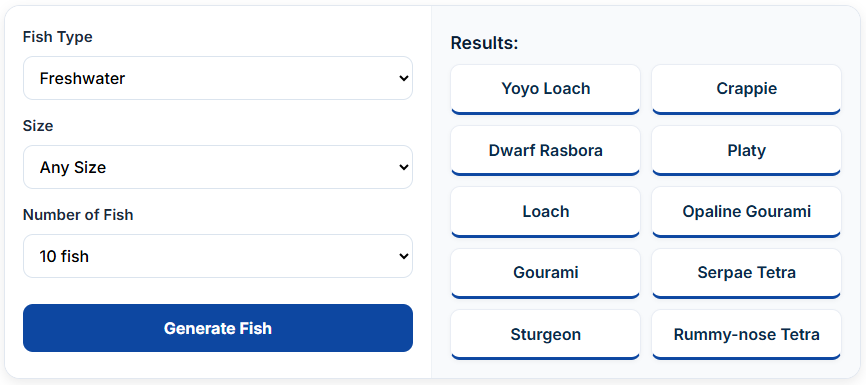
The Random Fish Generator is an online tool for discovering fish through random selections. Choose a fish type, select a size, decide how many fish you want, and click Generate Fish to see your results. It is a simple way to explore different types of fish for learning activities, quizzes, drawing challenges, creative projects, and general curiosity.
Whether you are interested in freshwater fish, marine species, or fish of different sizes, this random fish picker gives you a starting point for exploring aquatic life without manually browsing through long lists.
How to Use the Random Fish Generator
The generator has three selection fields. These let you customize the kind of fish selection you want to explore.
1. Choose a Fish Type
Start with the Fish Type dropdown. Select an available option to focus your results on a particular type of fish. This can help when you want to explore a narrower group rather than a broad selection.
The exact choices are displayed in the dropdown, so use the options available in the live tool.
2. Select a Fish Size
Next, use the Size dropdown to choose a size preference. Fish come in a wide range of body sizes, from tiny species to very large fish. This setting helps you explore fish according to the size options provided by the generator.
3. Choose the Number of Fish
Use the Number of Fish dropdown to decide how many results you want. A smaller selection can work well for a quick activity, while a larger selection can give you more ideas for a list, classroom exercise, or research task.
4. Click Generate Fish
Once your selections are ready, click the Generate Fish button. The generated fish will appear in the Results section.
You can change the available selections and generate another set whenever you want to explore different results.
Explore Different Types of Fish
Fish live in a variety of aquatic environments and have different body shapes, sizes, colors, and adaptations. Learning about these differences can make a random fish selection more interesting.
Freshwater Fish
Freshwater fish live in environments such as rivers, lakes, streams, and ponds. Examples include goldfish, guppies, trout, catfish, and many types of cichlids.
Freshwater habitats vary considerably. A fish adapted to a fast-flowing river may have different characteristics from one that lives in a still pond or lake.
Saltwater and Marine Fish
Saltwater fish live in seas and oceans. This broad group includes clownfish, tuna, angelfish, groupers, and many other species.
Marine environments include coral reefs, coastal waters, open oceans, and deep-sea habitats. Fish living in these areas have a wide range of physical adaptations.
Tropical Fish
Tropical fish are associated with warm-water environments. Many familiar aquarium species, including guppies, neon tetras, mollies, and bettas, are popular examples.
Their colors and patterns make them interesting subjects for observation, photography, art, and educational activities.
Deep-Sea Fish
Deep-sea fish live in parts of the ocean where sunlight is limited or absent. Some have unusual body shapes and adaptations that help them survive in deep-water conditions.
The Smithsonian’s article on the incredible diversity of fish explains how fish body shapes relate to their environments and ways of life.
Why Do Fish Have Different Sizes and Shapes?
Fish are not all built the same way. Their body shapes and sizes are connected to how they move, feed, avoid predators, and live in their environments.
For example, streamlined fish such as tuna are adapted for efficient movement through open water. Flat-bodied fish such as flounders are suited to life close to the seafloor. Other fish have rounded bodies, elongated shapes, or distinctive fins that support different ways of living.
When exploring a generated fish, consider these characteristics:
- Body shape: Is the fish streamlined, flat, rounded, or elongated?
- Size: Is it a small fish, a medium-sized species, or a very large fish?
- Color and pattern: Does it have stripes, spots, bright colors, or camouflage?
- Habitat: Is it associated with rivers, lakes, coral reefs, coastal waters, or the open ocean?
- Movement: Does it swim quickly, stay near the bottom, or move through reefs and aquatic vegetation?
These questions can turn a simple random selection into a useful learning activity.
Common Fish Examples to Explore
Here are some familiar fish that can help you understand the variety of aquatic species.
Fish | Interesting characteristic |
Clownfish | Known for its association with sea anemones |
Goldfish | A familiar freshwater aquarium fish |
Guppy | A small, colorful freshwater fish |
Great White Shark | A large marine predator |
Tuna | A streamlined fish known for powerful swimming |
Seahorse | Recognized by its unusual upright body shape |
Pufferfish | Known for its ability to inflate its body |
Anglerfish | Some species use a distinctive lure to attract prey |
Neon Tetra | A small fish with bright, iridescent coloring |
Manta Ray | A large marine animal related to sharks |
These examples are provided for general learning and inspiration. They are not guaranteed results from the generator.
Creative and Educational Ways to Use a Fish Generator
A random fish selection can be useful for more than casual browsing. It can give you a quick subject for an activity or help you explore species you may not have considered before.
Drawing and Art Challenges
Generate a fish and try drawing it using its body shape, fins, colors, and patterns as inspiration. You can also research a reference image to make your drawing more accurate.
Classroom Activities
Teachers can use random fish selections as prompts for short research tasks. Students can investigate where a fish lives, what it eats, and what physical features help it survive.
Quizzes and Guessing Games
Use a generated fish as the answer to a guessing game. Give clues about its habitat, appearance, or characteristics and let others identify it.
Creative Writing and Storytelling
Writers can use a fish selection as inspiration for an underwater setting, fictional character, or aquatic adventure. A real species can also become the starting point for an imaginative story.
Learning About Aquatic Biodiversity
Generate different fish and compare their habitats, shapes, and adaptations. This can introduce useful questions about marine ecosystems, freshwater environments, and biodiversity.
Important: A Random Fish Selection Is Not Aquarium Advice
A random fish result can be a fun way to discover species, but it should not be treated as a recommendation for your aquarium.
Fish have different environmental and care requirements. Before choosing a fish for a home aquarium, research its adult size, water conditions, diet, behavior, and compatibility with other species. A fish’s size alone does not determine whether it is suitable for a particular tank.
Common fish names can also refer to different species in different regions. Aqueon’s guide, What’s in a Fish’s Name?, explains why scientific names can help distinguish fish when common names vary.
Use the generator for exploration and inspiration, then consult reliable species-specific information before making aquarium or animal-care decisions.
Explore More Animal Generators
If you enjoy discovering different animals, you can explore other related tools on RandomNamePick.
- Discover a wider range of creatures with the Random Animal Generator.
- Explore birds and their different characteristics with the Random Bird Generator.
- Discover reptiles through the Random Snake Generator.
- Looking for ideas for a pet? Try the Random Pet Name Generator.
- Find a name for a feline companion with the Random Cat Name Generator.
- Need inspiration for a dog? Visit the Random Dog Name Generator.
- For fictional creatures and imaginative projects, try the Random Monster Generator.
- If you enjoy Pokémon and fictional creature designs, explore the Random Pokémon Generator.
Frequently Asked Questions
1. What is a Random Fish Generator?
A Random Fish Generator is an online tool that produces random fish selections. It can help users discover fish for educational activities, quizzes, drawing challenges, creative projects, and general exploration.
2. How do I use the Random Fish Generator?
Choose a Fish Type, select a Size, and decide how many fish you want using the Number of Fish dropdown. Then click Generate Fish to display your results.
3. Can I generate fish by type?
Yes. The Fish Type dropdown allows you to select from the options available in the tool before generating results.
4. Can I choose the size of fish?
Yes. Use the Size dropdown to customize your selection according to the size options provided by the generator.
5. Can I generate multiple fish at once?
Yes. The Number of Fish dropdown lets you choose how many fish to generate in one selection.
6. What can I use random fish results for?
You can use generated fish as prompts for drawing activities, classroom research, quizzes, storytelling, educational games, and learning about aquatic biodiversity.
7. Does the Random Fish Generator recommend fish for my aquarium?
No. A random selection is not an aquarium compatibility or care recommendation. Always research a fish’s specific requirements, adult size, water conditions, diet, and compatibility before deciding to keep it.
8. What is the difference between freshwater and saltwater fish?
Freshwater fish live in environments such as rivers and lakes, while saltwater fish live in seas and oceans. Their bodies and physiological adaptations differ according to the environments in which they live.
Discover More Fish with Random Selections
Exploring aquatic life is a great way to learn about the variety of species found in rivers, lakes, seas, and oceans. The Random Fish Generator makes it easy to start exploring by selecting a fish type, choosing a size, and generating the number of results you want.
Try different combinations, compare the fish you discover, and use each result as an opportunity to learn something new about aquatic life.