
Random Animal Generator – Fun, Interactive, and Educational Tool
The Random Animal Generator is a free online tool that helps you discover different animals through random selection. Choose an animal category, size, habitat, and number of animals to generate a selection that matches your preferences. Whether you need animal ideas for a classroom activity, drawing challenge, quiz, game, or creative project, this random animal picker makes animal discovery simple and enjoyable.
Instead of browsing long lists of animal names, you can use the generator to explore different species and find animals you might not have considered before.
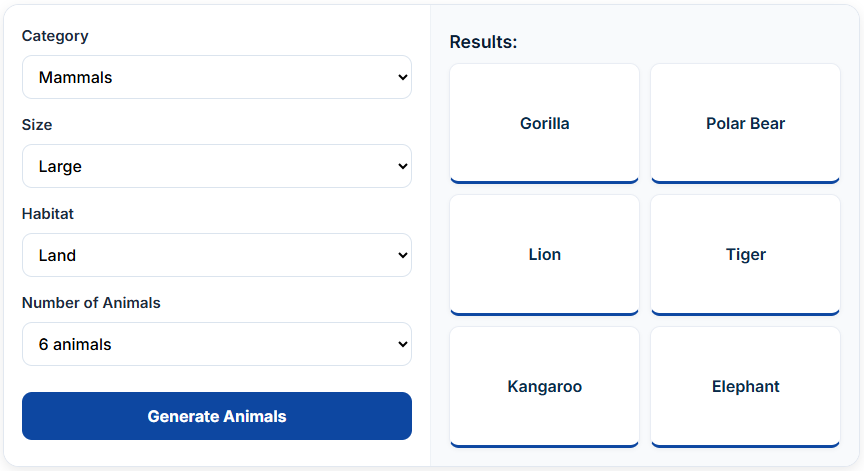
How to Use the Random Animal Generator
Using this random animal generator online takes only a few steps. The available filters help you narrow your selection before generating results.
1. Choose an Animal Category
Start by selecting a category from the Category dropdown. Animal categories help organize different kinds of animals into groups, making it easier to explore a particular part of the animal kingdom.
For example, you might want to explore mammals, birds, reptiles, fish, or other animal groups, depending on the options available in the dropdown.
2. Select an Animal Size
Use the Size option to narrow your selection according to animal size. This can be useful when you want to discover smaller creatures, larger wildlife, or animals within a particular size range.
Comparing animals of different sizes can also provide interesting ideas for educational activities and drawing challenges.
3. Choose an Animal Habitat
Select a habitat to explore animals associated with different natural environments. Habitats provide useful context for understanding where animals live and what environmental conditions they need.
You can use this filter to focus your animal selection around a particular environment, depending on the available choices.
4. Select the Number of Animals
Choose how many animals you want the generator to produce. A smaller selection is useful when you need one or a few animal ideas, while a larger selection gives you more options for a quiz, classroom exercise, or creative challenge.
5. Generate Random Animals
After selecting your preferences, click the Generate Animals button. Your randomly selected animal results will appear in the Results section.
You can adjust the available filters and generate another selection whenever you want to explore different animals.
Explore Different Types of Animals
The animal kingdom includes an enormous variety of species with different physical characteristics, behaviors, and environments. Exploring animal groups is a useful way to learn about this diversity.
Here are some broad animal groups you can explore as part of your animal discovery activities.
Mammals
Mammals include familiar animals such as lions, elephants, bears, dogs, cats, and dolphins. They are generally characterized by hair or fur at some stage of life, and females produce milk for their young.
If you want to explore a particular animal group, try the Random Dog Name Generator or Random Cat Name Generator for pet-related naming ideas.
Birds
Birds are known for their feathers, beaks, and wings. They live in a variety of environments, including forests, wetlands, grasslands, mountains, and coastal areas.
Use the Random Bird Generator to explore bird-related selections and discover more about different bird species.
Reptiles and Amphibians
Reptiles include snakes, lizards, turtles, and crocodiles. Amphibians include frogs, toads, and salamanders. These groups have different physical characteristics and life requirements.
If snakes interest you, explore the Random Snake Generator for more focused animal selections.
Fish and Aquatic Animals
Aquatic animals live in water environments, including freshwater rivers and lakes or saltwater oceans. Fish are one familiar group, alongside many other forms of aquatic life.
You can explore the Random Fish Generator to discover more fish-related options.
Discover How Animal Size and Habitat Are Connected
An animal’s size and habitat are two useful ways to explore wildlife, but they describe different characteristics.
Animal size refers to physical dimensions, while habitat describes the natural environment where an animal lives and finds the resources it needs. A habitat can provide food, shelter, water, and suitable conditions for survival.
For example, a large elephant and a small insect have very different physical sizes and living requirements. Likewise, animals living in forests, deserts, freshwater environments, and oceans experience different environmental conditions.
For additional learning, National Geographic’s guide to habitats and microhabitats explains how natural environments support different organisms. The Smithsonian National Zoo’s habitat learning resource also introduces students to animal habitats and the basic needs of wildlife.
These resources can help turn a random animal selection into a more meaningful learning activity.
Fun Ways to Use a Random Animal Picker
A random animal picker can be useful for more than simply discovering animal names. Here are several practical ways to use it.
- Drawing Challenges: Generate an animal and try drawing it from memory or reference. This is a fun way for artists and beginners to practice drawing different animal shapes and features.
- Classroom Activities: Teachers can generate animals for students to research, classify, or discuss during science lessons.
- Animal Quizzes: Use generated animal names to create guessing games, trivia questions, or species-recognition challenges.
- Creative Writing: Writers can use random animals as characters, story subjects, or inspiration for imaginative settings.
- Educational Games: Parents and teachers can use random animal selections for matching games, spelling exercises, and animal classification activities.
- Wildlife Discovery: Explore unfamiliar animal names and use them as starting points for learning about biodiversity.
For fictional creatures rather than real animal species, you can also explore the Random Monster Generator or Random Pokémon Generator.
Why Use Our Random Animal Generator?
Finding an animal to use in a project or activity can sometimes take longer than expected. A random animal generator offers a simple way to get new ideas without manually searching through extensive animal lists.
Some useful advantages include:
- Filtered Selection: Use category, size, and habitat options to narrow your animal selection.
- Multiple Results: Choose the number of animals you want to generate.
- Creative Inspiration: Discover animals for drawing, writing, games, and other creative projects.
- Learning Opportunities: Explore animal groups and use generated results as starting points for further research.
- Simple Operation: Select your preferences and generate animals through a straightforward interface.
If your goal is to find a name for an existing pet rather than discover an animal species, the Random Pet Name Generator is another useful option.
Important Things to Know About Random Animal Selection
A random selection is a starting point for exploration, not a scientific identification or research result. The animal returned by the generator should not be treated as proof of a species’ habitat, conservation status, behavior, or other biological characteristics.
For accurate animal information, verify important facts using reliable educational or scientific resources. Also, remember that the filters only narrow the choices according to the options available in the tool; they do not replace detailed wildlife research.
Frequently Asked Questions
1. What is a Random Animal Generator?
A Random Animal Generator is an online tool that selects animals randomly based on user preferences. It can help users discover animal names for learning, games, quizzes, drawing activities, and creative projects.
2. How does the random animal picker work?
Choose an animal category, size, habitat, and the number of animals you want. Click Generate Animals, and the tool displays your random selections in the Results section.
3. Can I generate animals by category?
Yes. The Category dropdown lets you narrow the animal selection according to the available categories. This makes it easier to explore particular groups instead of generating from an unrestricted selection.
4. Can I choose animals based on their size?
Yes. The Size dropdown provides a way to filter the selection according to animal size. The available choices determine which size groups you can explore.
5. Can I generate animals based on their habitat?
Yes. Select an option from the Habitat dropdown to narrow your random animal selection according to the available habitat choices.
6. Can I generate multiple random animals at once?
Yes. The Number of Animals dropdown allows you to select how many animals you want in a single generation. This is useful when preparing animal lists, classroom activities, or games.
7. What can I use random animal results for?
You can use generated animals as inspiration for drawing challenges, classroom assignments, animal quizzes, storytelling, educational games, and wildlife discovery. For scientific facts, research each animal using reliable sources.
8. Is a random animal generator useful for learning?
Yes. It can introduce students to unfamiliar animal names and encourage them to investigate animal groups, physical characteristics, and habitats. Teachers can turn each result into a short research or classification activity.